
Introduction
Cloud computing has revolutionized the way businesses and individuals store, access, and process data. It offers flexibility, scalability, and cost reduction, becoming essential in digital transformation.
In this article, you will understand what cloud computing is, how it works, its models, advantages, challenges, and how it impacts the modern world.
1. What is Cloud Computing?
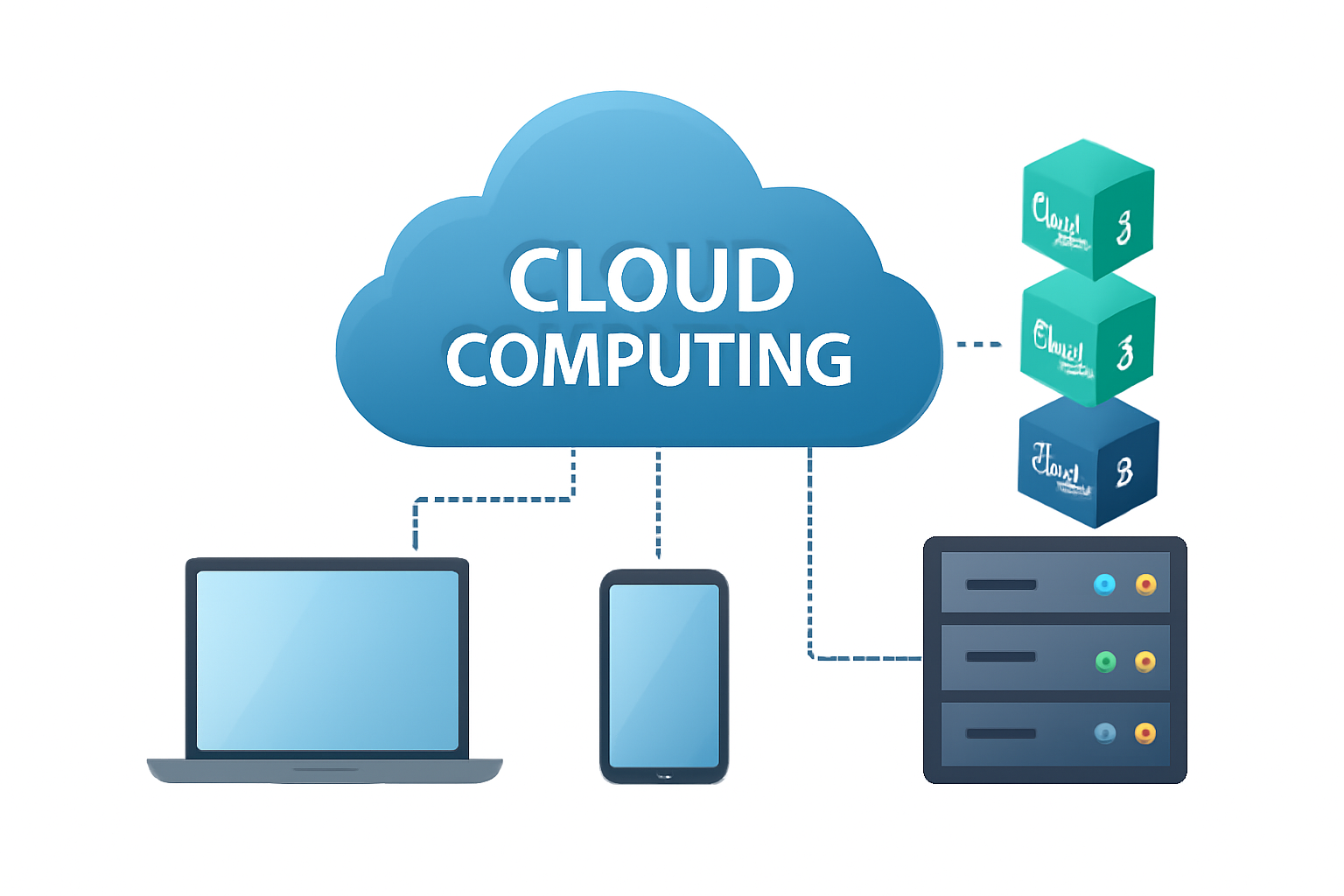
Cloud computing is the delivery of computing services — such as servers, storage, databases, networks, software, analytics, and intelligence — over the internet (“the cloud”).
Instead of storing files and programs locally, everything is available in remote data centers, accessible from anywhere.
2. How Does Cloud Computing Work?
- Users access resources via the internet.
- Cloud providers (such as AWS, Google Cloud, Microsoft Azure) manage and maintain the infrastructure.
- Services are scalable, adjusting to real-time demands.
- It works with physical servers spread globally, utilizing virtualization to distribute resources.
3. Cloud Computing Models
- SaaS (Software as a Service):
Using applications via the internet.
Examples: Gmail, Google Drive, Zoom. - PaaS (Platform as a Service):
A platform for developing applications without managing the infrastructure.
Examples: Google App Engine, Heroku. - IaaS (Infrastructure as a Service):
Virtualized infrastructure, such as servers and storage.
Examples: Amazon AWS, Microsoft Azure.
4. Types of Cloud
- Public Cloud: Shared among multiple users (e.g., AWS, Google Cloud).
- Private Cloud: Dedicated infrastructure for a single organization.
- Hybrid Cloud: A combination of public and private cloud.
- Multicloud: Using multiple cloud providers.
5. Benefits of Cloud Computing
- Cost Reduction: No need to invest in physical infrastructure.
- Scalability: Resources increase or decrease according to demand.
- Accessibility: Remote access from anywhere with internet.
- Security: Providers invest in high data protection.
- Automatic Updates: Always with the latest versions.
- Sustainability: Lower energy consumption compared to in-house data centers.
6. Disadvantages and Challenges
- Dependence on Internet Connection.
- Costs Can Be High Without Proper Planning.
- Concerns About Data Privacy.
- Compliance with Local Data Protection Laws (LGPD, GDPR).
- Risk of Failures in Global Services (Downtime).
7. Cloud Computing in Everyday Life
- Personal storage (Google Drive, OneDrive, iCloud).
- Music and video streaming (Netflix, Spotify, YouTube).
- Cloud gaming (Xbox Cloud Gaming, Nvidia GeForce Now).
- Automatic photo and file backups.
- Online teaching platforms and remote work.
8. The Future of Cloud Computing
- Growth of Edge Computing (processing at the edge).
- Integration with Artificial Intelligence and IoT.
- Increased focus on security and privacy.
- Sustainability with more efficient data centers.
Expansion of cloud services to small businesses and individuals.