
Introduction
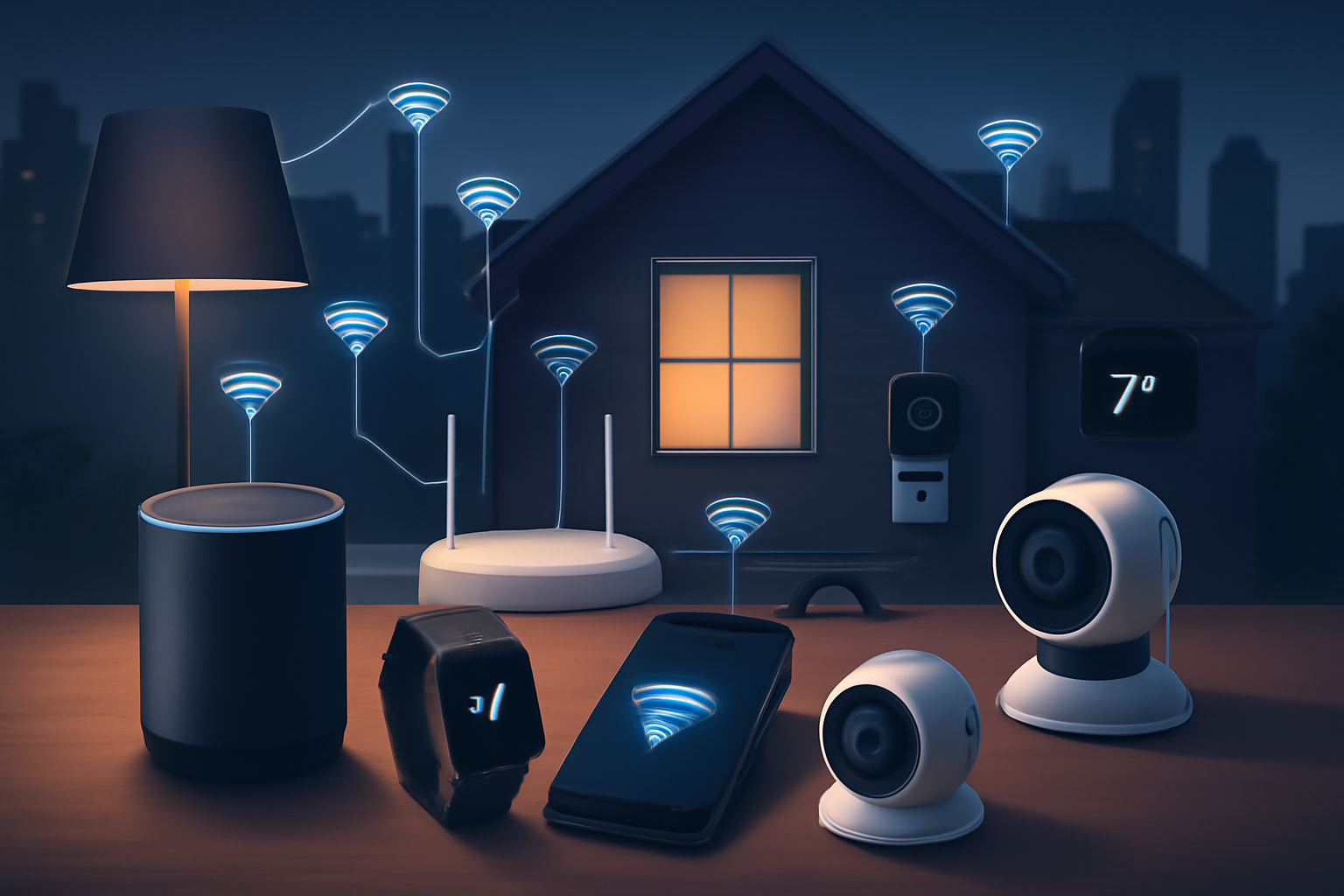
We live in an era where everyday objects are becoming smart and connected to the internet. This phenomenon is called the Internet of Things (IoT). From smart light bulbs to autonomous cars, IoT is transforming homes, cities, industries, and even healthcare.
In this article, you will understand what IoT is, how it works, its applications, benefits, challenges, and how it will shape the future of society.
1. What is the Internet of Things (IoT)?
IoT is a network of physical devices connected to the internet, capable of collecting, sending, and receiving data. These devices range from household appliances, sensors, and cameras to industrial machines and vehicles.
The goal of IoT is to make objects smart, enabling automation, monitoring, and remote control.
2. How Does IoT Work?
- Devices: Equipped with sensors, actuators, and connectivity.
- Network: Uses Wi-Fi, 4G, 5G, Bluetooth, or specific networks (LoRaWAN, NB-IoT).
- Processing: Data is processed locally or in the cloud.
- Actions: The system executes automatic commands or sends alerts.
3. IoT Applications
- Smart Homes:
Smartphones control light bulbs, locks, and cameras.
Voice assistants (Alexa, Google Nest).
Smart thermostats and appliances. - Smart Cities:
Efficient public lighting.
Traffic and security monitoring.
Waste and air quality management. - Industry 4.0:
Sensors monitoring machines in real-time.
Predictive maintenance.
Automated inventory control. - Connected Vehicles:
Autonomous cars.
Remote tracking and monitoring.
Integration with apps and assistants. - Connected Health:
Wearable devices (smartwatches, heart rate monitors).
Remote patient monitoring.
Smart hospitals.
4. Benefits of IoT
- Automation: Reduces manual tasks.
- Energy Efficiency: Smart use of resources.
- Cost Savings: Less maintenance and waste.
- Security: Remote monitoring and quick response.
- Quality of Life: Increased comfort and personalization.
5. Challenges and Risks of IoT
- Cybersecurity: Devices are vulnerable to attacks.
- Privacy: Collection of sensitive data.
- Standards and Interoperability: Different manufacturers, different systems.
- Connectivity Dependence: Network failures impact devices.
- Initial Cost: Some smart systems are still expensive.
6. IoT and the Future
- 5G: Will increase the capacity and speed of IoT devices.
- Edge Computing: Local processing for faster responses.
- Artificial Intelligence: Devices that learn and adapt.
- Sustainability: Resource monitoring and waste reduction.
Expansion in agriculture, healthcare, and education.