
Introduction
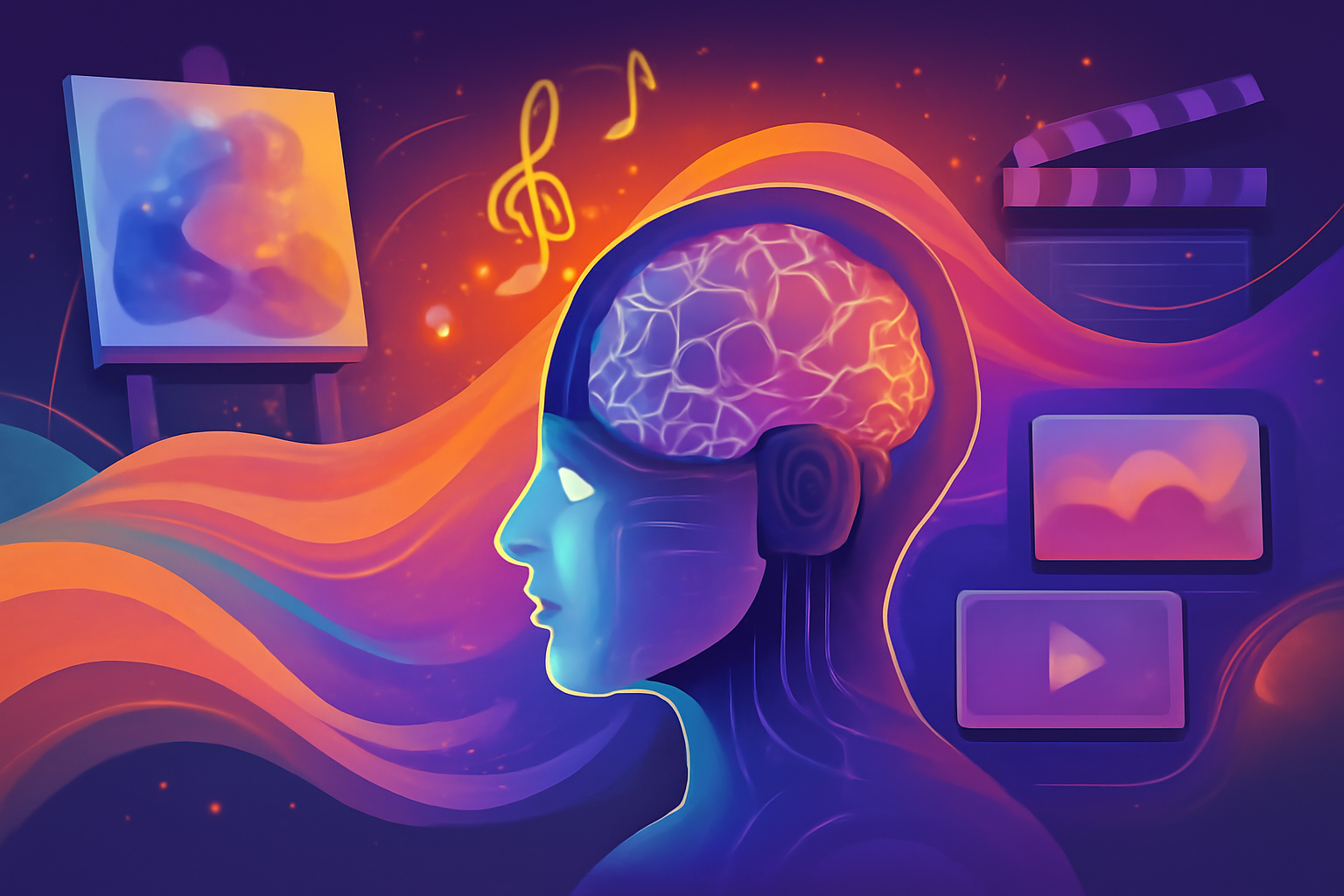
Generative Artificial Intelligence (Generative AI) is one of the most revolutionary areas of technology, capable of creating original content — such as texts, images, music, and videos — from data and algorithms.
In this article, we will explore what generative AI is, how it works, its practical applications, ethical challenges, and its impact on human creativity. New forms of collaboration between humans and machines.
1. What Is Generative Artificial Intelligence?
Generative AI is a branch of AI focused on creating new data or content by learning existing patterns, using models such as Generative Neural Networks and Machine Learning algorithms.
2. How Does Generative AI Work?
- Machine Learning: The AI is trained with large volumes of data.
- Generative Models: Such as GANs (Generative Adversarial Networks) and Transformers.
- Content Generation: Based on the patterns learned, AI creates new texts, images, or sounds.
3. Main Applications
- Text Generation: Automatic production of articles, scripts, and summaries.
Virtual assistants that answer questions. - Image and Art Creation: Tools that generate digital images based on descriptions.
AI-generated digital art. - Music Composition: Creation of original music for soundtracks or commercials.
- Videos and Animations: Automated production of audiovisual content.
4. Benefits of Generative AI
- Accelerates Creative Production: Saves time and resources.
- Mass Personalization: Content tailored to specific audiences.
- Democratic Access: Enables creation for those without technical skills.
5. Challenges and Ethical Considerations
- Authenticity: How to distinguish human content from AI-generated content.
- Misinformation: Risk of generating fake news.
- Copyright: Who owns the generated content?
- Impact on Work: Changes in creative professions.
6. The Future of Generative AI
- Evolution of models for better quality and realism.
- Integration with other technologies, such as augmented reality.